
- This event has passed.
DEMOCRATIZATION IN THE NORDIC WORLD
September 17—1:00 pm – 2:00 pm
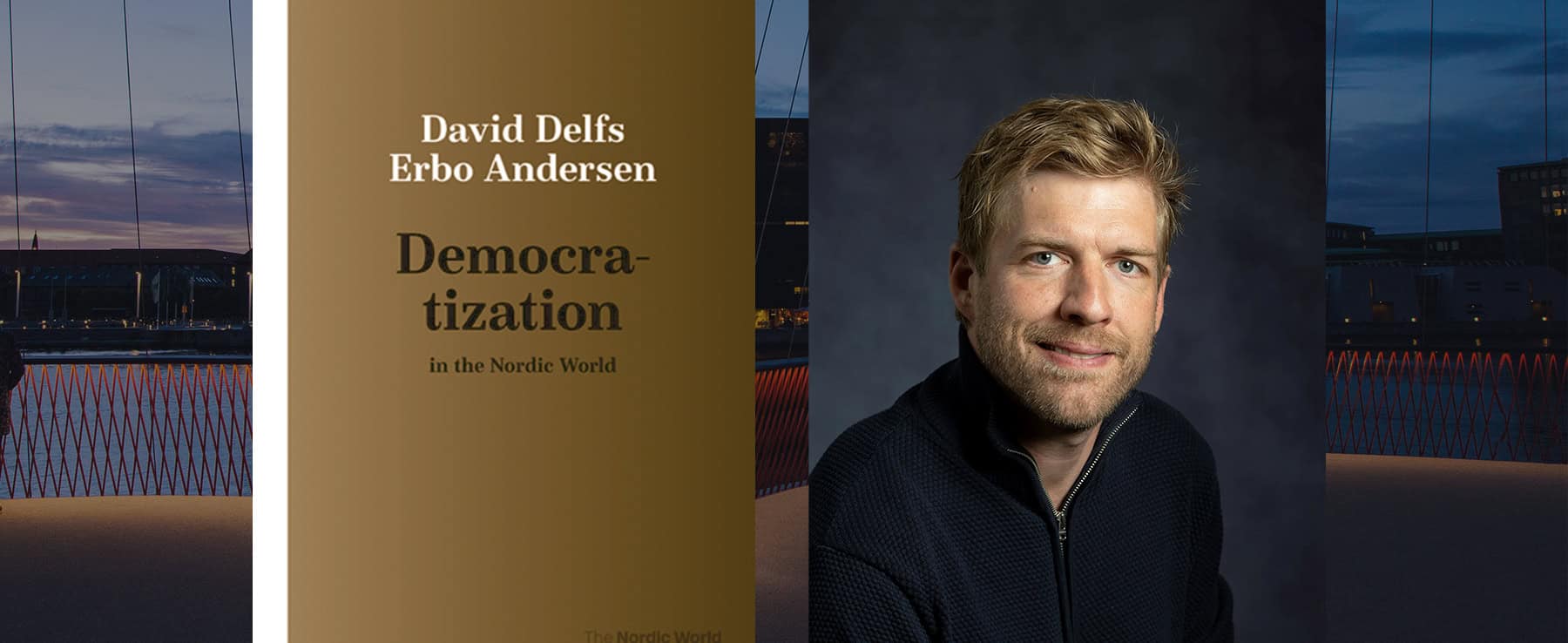
Join us on September 17 for a virtual discussion of Democratization in the Nordic World with author and researcher David Delfs Erbo Andersen! With moderator Eric Einhorn, Andersen will discuss his in-depth study comparing the formation of the Nordic states and their impact on social classes and democratization, out now from University of Wisconsin Press in the Nordic World series. This event will take place virtually via Zoom.
Denmark, Norway, and Sweden enjoy some of the happiest populations and highest standards of living in the world, thanks in part to stable, democratic systems of government. Here, David Delfs Erbo Andersen—an associate professor in the Department of Political Science at Aarhus University whose work centers on causes of democratization and democratic stability—presents a syncretic history of political and socioeconomic developments in the three Scandinavian countries since the early modern period. He also contrasts their peaceful transitions with the more dramatic histories of otherwise similar European countries, like France and Germany.
Unlike these and many other countries—the United States among them—Scandinavia’s transition to democracy from monarchy was not marked by major violent upheavals or extreme political antagonism. Rather, Scandinavia’s peaceful process of democratization owed itself to the development of a penetrative bureaucracy in the early modern period and the activism of cooperative associations, first of farmers in the early 19th century and then of industrialized workers in the late 19th and early 20th centuries. Thanks to the gradual, relatively consensual adoption of political reforms and social norms, the history of “Nordic democratic exceptionalism” today helps account for the ongoing stability of the Scandinavian countries.